From follower to customer: how social media effectively generates revenue
15 July 2026
A thousand followers and not a single extra customer. It's the most frustrating situation there is, and it happens more often than business owners dare to admit. The problem is almost never...
A thousand followers and not a single extra customer. It's the most frustrating situation there is, and it happens more often than business owners dare to admit.
The problem is almost never that you're posting too little. It's that there's no bridge anywhere between "nice" and "buying". Followers know what you make, but not what they should do next.
The path a customer takes
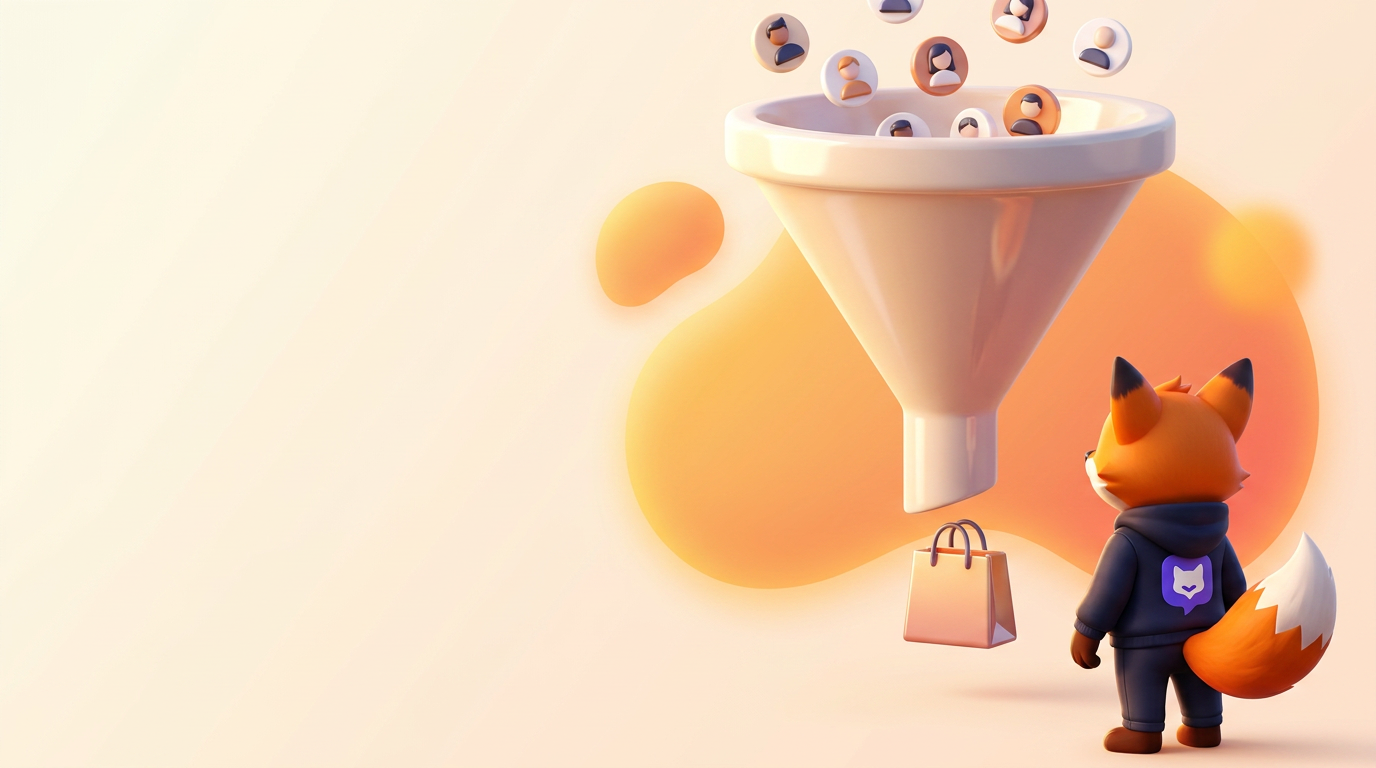
Between someone who sees your post and someone who pays, there are four steps. Every channel, every post, belongs to one of them.
They see you. A video, a photo, a shared post. Goal: existence.
They trust you. Reviews, results, faces, how you work. Goal: credibility.
They want. Something concrete: an offer, a reason, a motivation to act now.
They act. Calling, booking, coming in, ordering.
Most businesses post exclusively in steps one and two, and then expect step four. That doesn't happen on its own.
The question you ask that nobody else asks
Look at your last ten posts. How many of them include a concrete next step? Not "link in bio", but something a person can do without having to think.
"Call us for a free quote, 09 xxx xx xx." "Send us a message with your size, we'll set it aside." "Wednesday open until 8pm, no appointment needed."
One in five posts with a clear step is enough. But one in ten is too few, and zero is fatal.
Why "link in bio" doesn't work
It's three actions: remember, go to your profile, click. Every action costs you people. For local businesses, the shortest route is almost always the best: a phone number right there in the post, an address, opening hours.
People who live five kilometres away don't need a landing page. They need a reason to come by today.
What actually gets people moving
Scarcity that's real. "Only four left." "Two spots still available on Friday." Don't make it up. Customers can tell the difference, and getting caught once costs you more than ten posts will ever earn you.
An easy first step. Nobody immediately books a kitchen renovation worth twenty thousand euros. But a free measurement? That they'll do. Lower the threshold for that first yes.
A reason. Weather, season, public holiday, local event. "It's going to freeze tonight, we still have winter tyres in stock." That's not a sales pitch, that's timing.
Proof, right before the ask. Showing a satisfied customer and then asking people to call works better than the other way around.
Measuring without an analytics tool
You don't need a dashboard. You need one question: "How did you find us?"
Ask every new customer, write the answer on a sheet next to the till, and look at that sheet after a month. That's rougher than any statistic, and infinitely more honest.
You can also make it visible: "Mention this post and get a coffee." You'll know straight away what's being mentioned.
Expectations that make sense
Social media rarely sells on the day itself. It shortens the path, keeps you top of mind, and makes someone call you instead of your competitor. That's the return, and it's real — but it comes over weeks, not hours.
Anyone who posts one call to action, gets no phone calls, and concludes it doesn't work has stopped three weeks too early.
The conclusion
Followers aren't a goal. They're the audience for the moment when you ask for something. If you never ask for anything, they'll stay spectators.
Look at your last ten posts and count the concrete steps. Are there zero? Then you know exactly why those thousand followers stay silent.
→ Consistent posts with a clear next step, automatically scheduled? See what Promobuddy costs or start for free.